
Wick Hydroponic System – Easy Weed Hydroponics
Byredd
What is a Wick System?
A wick system is one of the most straightforward, low-tech hydroponic systems there is. It is one that is very easy to set up and manage and uses capillary action to move nutrients up a cotton wick to your plants. The wick system is much easier and cheaper to set up and operate than a NFT system or DWC system and we recommend it as a great starting place if you sometimes find all the hydroponic talk a bit too technical.
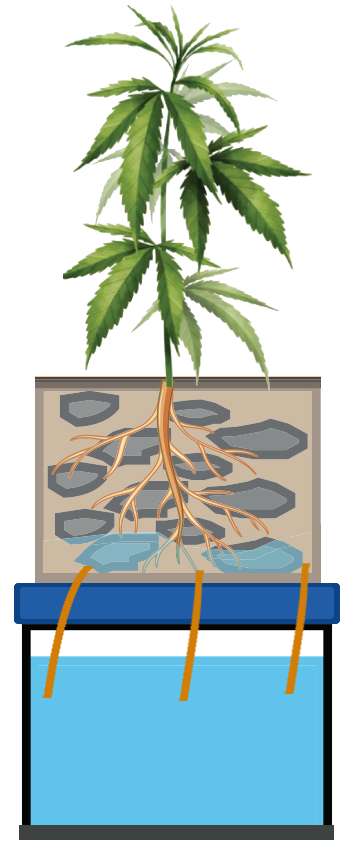
A wick system is passive. This means it has no moving parts. As a passive system there is very little that can go wrong with it.
[affiliatable id=’156707′]
A wick system is easy to understand. Wick systems, with plants other than marijuana, are often used to make great classroom projects. The downside of a wick system is that it is not as effective as some of the more complex hydroponic systems and not suitable for high maintenance plants or plants that have very large water requirements. The capacity of wicking to move water is limited and large marijuana plants require a lot of wick material to flourish. Another potential downside of wick systems is that your nutrient solution remains static and can become low in oxygen. This is not always a problem as, especially if you have a very porous growing medium, much of the root mat is open to the air. The best and easiest thing to do however is to add an air pump to the nutrient reservoir which will boost oxygen levels in the solution.
Why use Wick Systems?
- Easy to understand – The concepts of a wick system are very basic and easy to comprehend;
- Simplicity – Wick systems keep it simple, less chance of things going wrong;
- Low maintenance – With a wick system it is possible to leave your plants unattended for long periods of time;
- Cheap – Very cheap to construct and run with nothing much that can go wrong.
How Does a Wick System Work?
A wick system operates on the principle of capillary action. This is the process that causes liquids to rise against gravity through another material. It is how an oil lamp works, pulling the oil up the wick as it is burnt off by the flame. In a hydroponic wick system the wicks transport the nutrient solution to the plants roots in the same way, making water and food available to the plant at all times. As the plant draws in the nutrients by its roots, so they are pulled up the wick from the reservoir. Because it is the plant that provides the power to lift the solution it is impossible to overwater a plant in a wick system.
It is possible to make single plant systems where you have just one pot above a small reservoir. Or you can have a large growing tray filled with medium and several plants suspended above a large reservoir.
A hydroponic wick system is a great, low maintenance method of growing marijuana. It is easy to understand and economical to run. As a passive system it has no moving parts and, if run without an air pump, makes no noise. It is not as productive as some of the other hydroponic systems but is known to be effective and produce reasonable crops.
Wick Hydroponic System FAQs
What is wick system in hydroponics?
The wick system is a hydroponic technique where a wick is used to deliver nutrient-rich water to the plants’ root system. The wick, typically made of cotton or another absorbent material, draws up the nutrient solution from a reservoir and transports it to the plant roots, providing them with the necessary water and nutrients for growth.
What are the disadvantages of a wick system?
The disadvantages of a wick system include uneven distribution of water, limited control over watering levels, potential for root rot, and dependency on capillary action.
What plants grow well in a wick system?
Here are some plants that grow well in a wick system: tomatoes, peppers, lettuce, herbs (such as basil, parsley, and cilantro), strawberries, and flowers like marigolds and geraniums.
How do you make a hydroponic wicking system?
The hydroponic wicking system is made by placing a wick material, such as cotton or felt, in a container with a nutrient solution. The wick draws up the solution and delivers it to the plant’s roots, providing water and nutrients.